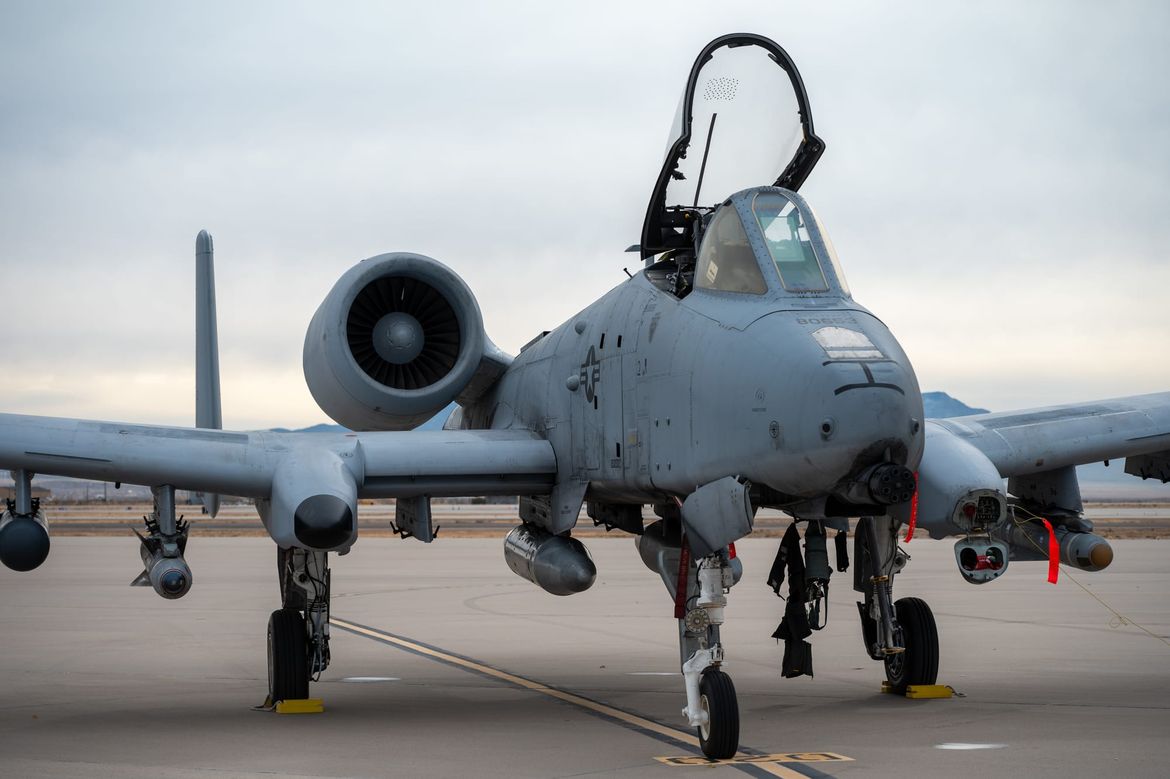
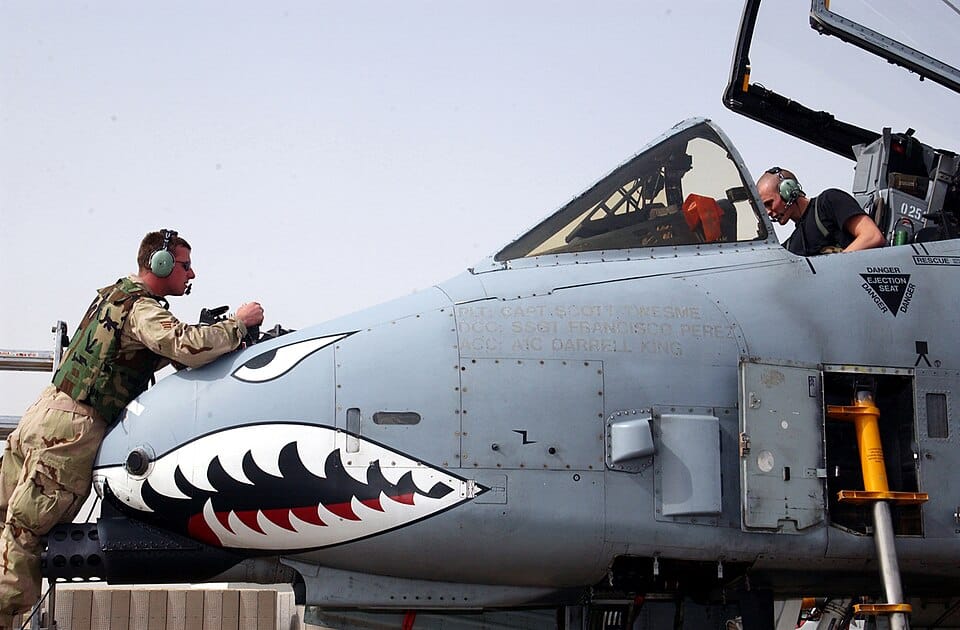
For nearly fifty years, the A-10 Warthog, officially known as the A-10 Thunderbolt II, has been one of the most recognizable Air Force aircraft ever built. Few military airplanes have earned the respect of pilots, Air Force maintainers, and the ground troops they protected quite like the Warthog. Whether you know it for its unmistakable silhouette, the thunderous sound of the GAU-8 Avenger, or its legendary ability to survive battle damage, the A-10 has become an icon of military aviation history.

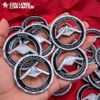
A-10 coin from Challenge Coin Nation
Today, however, the debate surrounding A-10 retirement continues to divide veterans, aviation enthusiasts, defense analysts, and active-duty service members. Some believe the aircraft should remain in service indefinitely because of its unmatched close air support capabilities. Others argue that modern threats require modern aircraft.
Both viewpoints deserve respect.
At Challenge Coin Nation, we believe preserving military history includes remembering not only the victories of legendary aircraft but also understanding why military technology must continue to evolve.
We at Challenge Coin Nation are a veteran founded company and are honored to be able to continue serving our brothers and sisters in arms all over the world. We sell many different military themed items, but challenge coins are our specialty.
The A-10 Thunderbolt II was never designed to be glamorous.
It was designed to survive.
Developed during the Cold War, the aircraft's primary mission was to destroy Soviet armor while providing devastating close air support (CAS) to NATO ground forces. Every aspect of the aircraft reflected that mission.

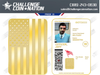
A-10 Flag from Challenge Coin Nation
Its titanium armored cockpit protected the pilot from enemy fire. Redundant hydraulic systems, manual flight controls, separated engines, and self-sealing fuel tanks gave the Warthog an incredible ability to absorb punishment.
Unlike faster fighter aircraft, the A-10 Warthog could fly low, remain over the battlefield for extended periods, visually identify targets, and support friendly forces with exceptional precision.
These capabilities made the aircraft invaluable during Operations Desert Storm, Iraqi Freedom, Enduring Freedom, and countless other combat operations.
Ground troops often described hearing an A-10 overhead as one of the most reassuring sounds on the battlefield.
Every military aircraft develops a personality.
Anyone who has served on a flightline knows this.
The A-10 Thunderbolt II earned a reputation for toughness that few aircraft could match.
Stories of damaged Warthogs returning safely became legendary throughout the Air Force. Aircraft came home with missing sections of wings, shredded flight controls, damaged engines, hydraulic failures, and significant structural damage that would have destroyed many other fighters.
For Air Force maintainers, these weren't simply stories from history books—they were often aircraft sitting in their own maintenance docks.
Keeping aging aircraft flying required skill, dedication, and countless hours of maintenance, but the Warthog rewarded those efforts by continuing to accomplish its mission.
The debate over A-10 retirement isn't really about whether the aircraft remains effective.
It absolutely does.
The question is whether today's battlefield still allows it to perform the mission for which it was designed.
Modern adversaries possess integrated air defense systems capable of detecting, tracking, and engaging aircraft at far greater distances than those envisioned during the Cold War.
Today's threats include:
The A-10's legendary armor cannot protect it from every modern threat.
Its low-altitude operating profile, slower airspeed, and lack of stealth make it increasingly vulnerable in highly contested airspace.
The Warthog didn't become obsolete because it stopped being good.
It became vulnerable because warfare evolved.
Military aviation history teaches an important lesson.
Outstanding aircraft eventually give way to newer designs.
The P-51 Mustang remains one of history's greatest fighters.
The B-17 Flying Fortress helped win World War II.
The F-4 Phantom served with distinction for decades.
None of these aircraft became failures.
Their missions changed.
Technology advanced.
The same is true for the A-10 Warthog.
Its remarkable service record is secure regardless of when the final aircraft leaves active duty.
Modern conflicts demand versatility.
Aircraft like the F-35 perform multiple missions during a single deployment, including intelligence gathering, electronic warfare support, precision strike, suppression of enemy air defenses, air superiority, and close air support.
While many veterans argue that no aircraft duplicates the A-10's CAS capability exactly, defense planners must also consider budget limitations, logistics, and the need for aircraft capable of surviving against advanced air defense systems.
Specialization created the Warthog's greatest strength.
It also limits its usefulness in future conflicts.
One aspect of the discussion receives surprisingly little attention.
Replacing combat losses is no longer as simple as building another airplane.
During World War II, American factories produced military aircraft at astonishing rates. The United States manufactured nearly 300,000 aircraft during the war, demonstrating an industrial capability unmatched in history.
Modern combat aircraft are different.
Today's Air Force aircraft contain advanced composite materials, stealth coatings, sophisticated radar systems, precision manufacturing, encrypted communications, and millions of lines of software.
America could certainly increase production during a national emergency, especially with modern robotics and automated manufacturing.
However, rebuilding supply chains, expanding engine production, qualifying additional suppliers, and increasing specialized manufacturing would still require significant time.
Modern defense manufacturing emphasizes quality and capability rather than mass production.
Aircraft can eventually be built.
Experience cannot.
Today's fighter pilots spend years progressing through undergraduate pilot training, formal training units, mission qualification, survival schools, and operational seasoning before becoming fully combat-ready.
Modern pilots manage sensors, electronic warfare systems, secure communications, data links, and networked battlespace operations while simultaneously flying some of the world's most sophisticated aircraft.
The same applies to maintainers.
Experienced crew chiefs, avionics specialists, propulsion technicians, weapons loaders, and inspectors represent decades of accumulated knowledge.
When experienced military professionals leave service, they take with them invaluable judgment that cannot be quickly replaced.
In many ways, people—not aircraft—have become America's most valuable military resource.
Although the aircraft will eventually retire, its legacy never will.
The Warthog protected generations of American service members.
It saved countless lives.
It earned the respect of pilots, maintainers, and the troops it supported.
Perhaps most importantly, it demonstrated that an aircraft doesn't have to be beautiful to become legendary.
The A-10 Thunderbolt II will forever remain one of the greatest close air support aircraft ever built.
Its retirement does not diminish its accomplishments.
Instead, it reminds us that every generation of military equipment ultimately passes the torch to the next.
At Challenge Coin Nation, we understand that preserving military history goes far beyond displaying retired aircraft in museums.
Every military challenge coin tells a story.
Whether it commemorates an A-10 Warthog squadron, an Air Force aircraft maintainer, a deployment, or a retirement after decades of service, each coin represents the people who made history possible.
Aircraft eventually retire.
Flightlines change.
New technology replaces old.
But the pride, sacrifice, professionalism, and memories of the men and women who served never fade.
That is why military challenge coins continue to hold such deep meaning for veterans, active-duty service members, and aviation enthusiasts. They preserve the legacy of legendary aircraft like the A-10 Thunderbolt II and ensure that future generations remember not only the machine, but also the Americans who launched it, maintained it, flew it, and trusted it in combat.
Shop for more coins at these pages:
Challenge Coin Nation Challenge Coins
Challenge Coin Nation Stock Challenge Coins
Challenge Coin Nation Custom Coins

MaintainerNation.com is THE website for Military members. Using stories and jokes to build friendships and good times! Check out the boards on MaintainerNation.com to share your story or tell your joke with the Maintainer Nation!

All copyright reserved by Maintainer Nation.



Leave a Comment