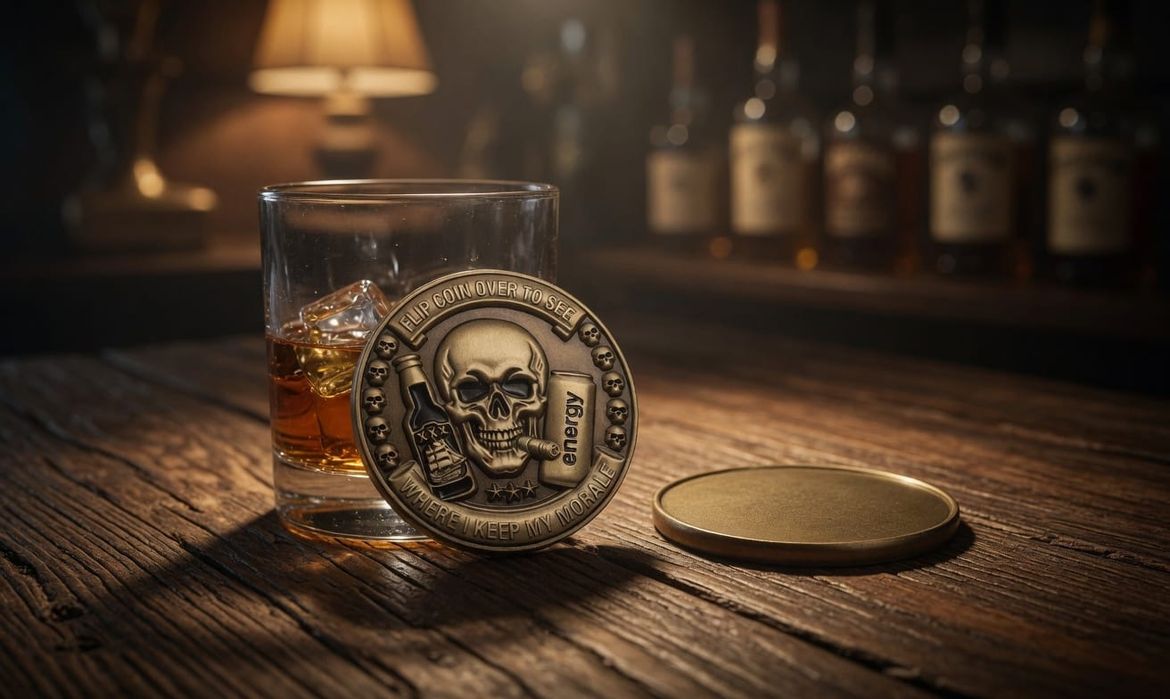
Yes it's blank on one side because we have zero morale!
Morale is one of the most important factors in military success, yet it’s also one of the hardest to measure. It doesn’t show up on a checklist, it isn’t tracked like fuel or parts, and there’s no simple metric that tells a commander, “Your unit has enough morale to complete the mission.” And yet, history repeatedly proves that morale can determine whether a force succeeds or fails.
At its simplest, morale is the willingness of individuals to continue performing their duties under stress, hardship, and uncertainty. It is built on trust in leadership, belief in the mission, and confidence in the people to your left and right. When morale is high, units can overcome equipment shortages, fatigue, and adversity. When morale is low, even the most technologically advanced force can struggle to function.
We at Challenge Coin Nation are a veteran founded company and are honored to be able to continue serving our brothers and sisters in arms all over the world. We sell many different military themed items, but challenge coins are our specialty. Check out our hilarious Morale Coin.
Military history offers countless examples of morale shaping outcomes. During World War II, Allied forces often faced entrenched and determined enemies, but their ability to sustain morale over long campaigns proved decisive. Whether it was soldiers pushing inland after D-Day or aircrews flying repeated missions over hostile territory, success depended not just on equipment, but on the mental resilience of those carrying out the mission.
On the other side, there are just as many examples of forces collapsing when morale broke down. Units that lose faith in their leadership, their mission, or their chances of survival tend to degrade rapidly. Discipline erodes, performance declines, and the mission suffers.
The takeaway is simple: morale is not a luxury—it is a combat multiplier.
In day-to-day military life, morale doesn’t look like a motivational speech or a poster on a wall. It shows up in behavior.

It’s the maintainer who stays late to fix a jet because they know someone is depending on it. It’s the crew that double-checks their work even when they’re exhausted. It’s the unit that maintains standards even when leadership isn’t physically present.
Morale is also visible in how people talk. Units with strong morale tend to joke, even under pressure. They complain—but in a way that still reflects ownership of the mission. Units with poor morale, on the other hand, tend to disengage. The humor disappears, replaced by apathy or frustration that doesn’t lead anywhere productive.
That distinction matters. Because humor, especially in the military, is not just entertainment—it’s a signal.
Military culture has always relied on humor as a coping mechanism. Not light, surface-level humor, but the kind that outsiders might find blunt, sarcastic, or even uncomfortable. Within the ranks, though, it serves a purpose.
Humor allows service members to acknowledge difficult realities without being overwhelmed by them. It creates a shared language for expressing frustration, fatigue, and stress in a way that doesn’t undermine the mission.
You’ll see this kind of humor everywhere:
This is where Challenge Coin Nation’s morale coin fits in perfectly.
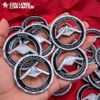
At first glance, the coin presents a familiar image: a skull with a cigar, paired with a bottle and an energy drink. It’s a visual shorthand for the grind—long hours, short sleep, and whatever it takes to keep going.
Around the edge is the phrase:
“Flip coin over to see where I keep my morale.”
It sets the expectation. There’s a setup, and you know a punchline is coming.
Then you flip the coin.
The reverse side is completely blank.
That’s the joke—and it lands immediately.
Because anyone who has spent time in the military understands exactly what it means.

The humor of the coin isn’t random. It’s rooted in shared experience.
There are times in every military career when morale feels like it’s running on empty. Long shifts, broken equipment, high operational tempo, unclear guidance—these are not rare situations. They’re part of the job.
The blank side of the coin acknowledges that reality without pretending otherwise. It doesn’t try to motivate or inspire. It simply reflects the truth: sometimes morale isn’t something you have readily available.
And yet, the people who appreciate this coin are the same ones who continue to perform their duties regardless. That’s the paradox of military morale. Even when it feels low, professionalism, discipline, and pride in the mission carry people forward.
It’s important to make a distinction between morale and professionalism. The two are related, but they are not the same.
Morale is how people feel. Professionalism is how they act.
In an ideal environment, both are high. People feel motivated, and they perform at a high level. But the military often operates in conditions where morale fluctuates. Missions don’t pause because people are tired or frustrated.
That’s where professionalism becomes critical.
Service members are trained to maintain standards regardless of how they feel. They show up, do the job, and complete the mission. Over time, that consistency builds trust within the unit. People know they can rely on each other, even when morale dips.
Coins like this one highlight that gap. They acknowledge the feeling—low morale—while also reinforcing the unspoken reality: the mission still gets done.
While humor can help sustain morale, it cannot replace effective leadership.
Leadership has a direct impact on morale, both positive and negative. Good leaders understand their people, communicate clearly, and provide purpose. They recognize effort, set realistic expectations, and create an environment where individuals feel valued.
Poor leadership, on the other hand, can quickly erode morale. Lack of communication, inconsistent standards, and unrealistic demands create frustration and disengagement.
What makes the military unique is that service members often continue to perform even under poor leadership conditions. But that performance comes at a cost. Over time, sustained low morale leads to burnout, reduced retention, and decreased effectiveness.
Humor, including coins like this, often becomes a way for individuals to process those frustrations without directly confronting them.
Challenge coins have always been more than simple keepsakes. They serve as markers of identity, experience, and belonging.
Traditional coins are awarded for achievement or recognition. They represent milestones—deployments, accomplishments, leadership roles. Those coins carry formal significance.
But there is another category of coins that captures something different: culture.
These coins reflect the unofficial side of military life. The jokes, the frustrations, the shared experiences that don’t make it into official records. They resonate because they are authentic.
The morale coin falls squarely into this category. It doesn’t commemorate a specific event. Instead, it captures a feeling that is widely understood across the military.
The reason this coin works is simple: it’s honest.
It doesn’t pretend that morale is always high. It doesn’t offer a solution. It simply acknowledges a reality that most service members have experienced at some point.
That honesty creates connection.
When someone sees the coin, they don’t need an explanation. They immediately understand the message because they’ve lived it. It becomes a shared joke, a small piece of validation that others have gone through the same thing.
And that, in itself, contributes to morale.
Because one of the key elements of morale is knowing you’re not alone.
Over time, items like this take on additional meaning. What starts as a joke becomes a reminder of a specific period in a person’s career.
Years later, the coin isn’t just about low morale. It’s about the people, the environment, and the experiences tied to it. The long shifts, the deployments, the conversations, the challenges—it all comes back.
That’s the unique aspect of military culture. Even difficult experiences are often remembered with a sense of pride or nostalgia.
The coin becomes a tangible link to that time.
Military morale is complex. It rises and falls based on leadership, mission demands, environment, and countless other factors. It cannot be forced, and it cannot be maintained through slogans alone.
But it can be supported—through strong leadership, shared purpose, and even humor.
This Challenge Coin Nation design captures a piece of that reality. It uses humor to reflect a truth that many service members recognize immediately. The blank reverse side isn’t just a punchline—it’s a shared understanding.
And in a profession where challenges are constant and expectations are high, sometimes that shared understanding is enough to keep people moving forward.
Because even when morale feels like it’s missing, the mission continues—and so do the people carrying it out.
Challenge Coin Nation Morale Coin Blog
Shop for more coins at these pages:
Challenge Coin Nation Challenge Coins
Challenge Coin Nation Stock Challenge Coins
Challenge Coin Nation Custom Coins

MaintainerNation.com is THE website for Military members. Using stories and jokes to build friendships and good times! Check out the boards on MaintainerNation.com to share your story or tell your joke with the Maintainer Nation!

All copyright reserved by Maintainer Nation.







Leave a Comment